

 Trendatelyoum News
 Medoz Social
 Packages Tools
 نتيجة الشهادة الأعدادية جميع المحافظات
 نتيجة الثانوية العامة
Comprehensive Guide to Bottle Cap Torque Tester Elevate Your Packaging Standards
Introduction
The success of any product often hinges on the smallest details, and in the packaging industry, ensuring a bottle cap is sealed correctly is one such critical factor. A bottle cap torque tester is a precision instrument used to measure the torque required to open or close a bottle cap. This simple yet essential tool ensures that caps are sealed with the right amount of force, balancing product safety, customer convenience, and regulatory compliance.
In this article, we’ll dive into everything you need to know about bottle cap torque testers, including their importance, how they work, their benefits, applications, and tips for selecting the right one. At , we provide industry-leading torque testing solutions tailored to your needs.
Why Bottle Cap Torque Testing Matters
1. Product Safety
Proper torque application ensures that bottle caps are sealed securely to prevent leaks, contamination, or spoilage. Overly loose caps can cause product degradation, while overly tight caps can frustrate consumers or cause injuries.
2. Regulatory Compliance
Different industries have strict standards for packaging. Torque testing ensures compliance with these standards:
- Beverages: Retaining carbonation and preventing leakage.
- Pharmaceuticals: Adhering to child-resistant and tamper-evident regulations.
- Cosmetics: Maintaining airtight seals for product longevity.
- Chemicals: Securing hazardous materials safely.
3. Customer Satisfaction
Packaging is a vital touchpoint for consumers. A bottle that is hard to open or prone to leaking can create a negative experience. Torque testers help ensure caps are functional and easy to use.
4. Protecting Brand Reputation
Faulty packaging can damage your brand’s credibility and lead to costly recalls. Torque testing guarantees consistent packaging quality, safeguarding your reputation.
How Bottle Cap Torque Testers Work
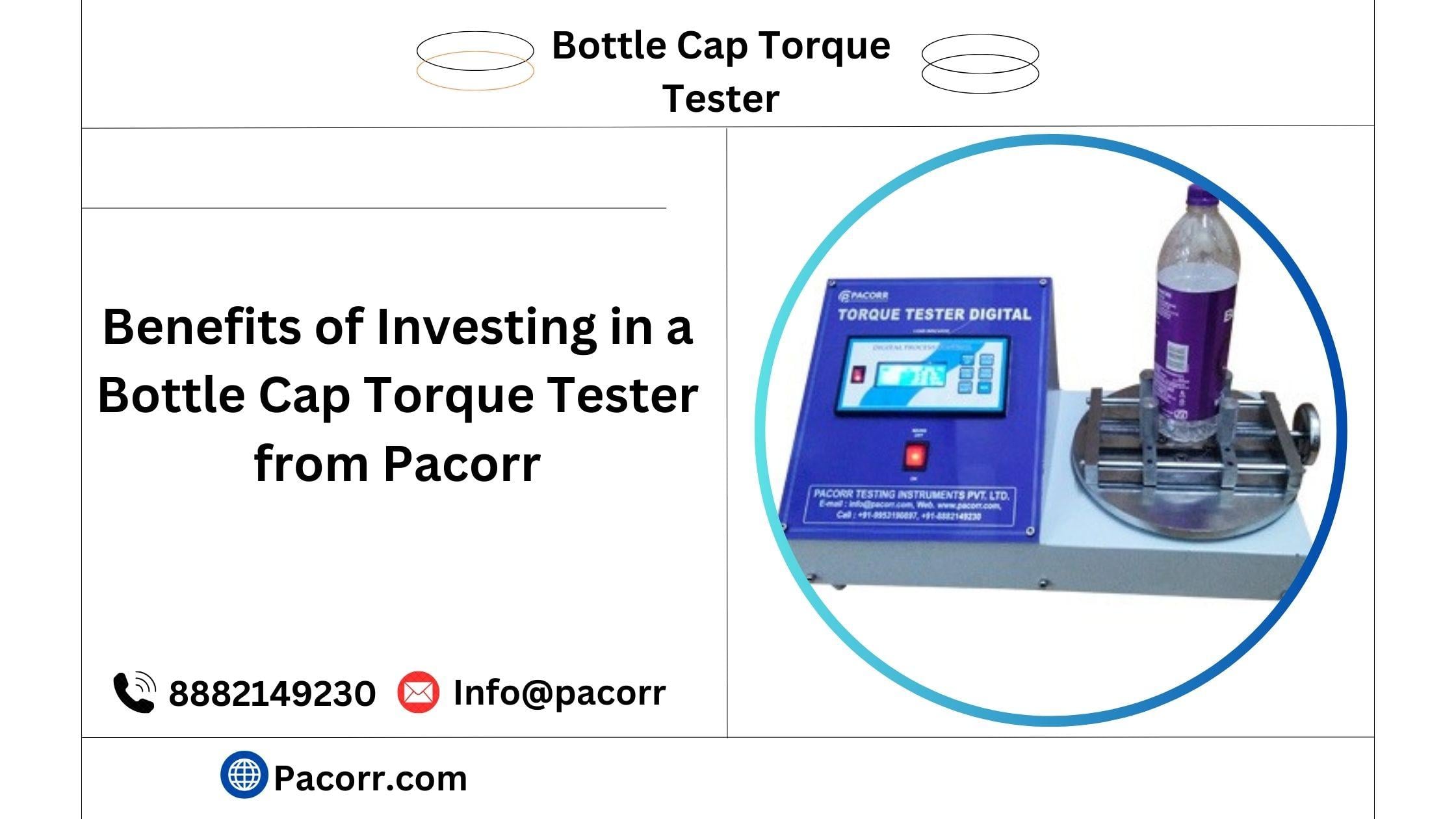
Bottle cap torque tester are designed to measure the force required to rotate a cap, whether tightening or loosening it. Here’s how they function:
1. Components of a Torque Tester
- Clamping Mechanism: Holds the bottle securely during testing.
- Torque Sensors: Measure the applied rotational force.
- Display Panel: Shows real-time readings of the measured torque.
- Adjustable Fixtures: Accommodate different bottle sizes and cap types.
2. Types of Torque Testers
- Manual Torque Testers: Economical and suitable for low-volume testing. Requires operator handling.
- Digital Torque Testers: Equipped with advanced sensors and a digital display for precise readings.
- Automated Torque Testers: Ideal for high-volume production lines, offering fast and consistent results.
3. Testing Process
- Place the Bottle: Secure the bottle in the tester’s clamping mechanism.
- Apply Torque: Rotate the cap manually or automatically to measure the force required to open or close it.
- Analyze Results: The tester records and displays the measured torque value. This is compared to predefined standards to ensure compliance.
Benefits of Using a Bottle Cap Torque Tester
1. Improved Product Quality
Accurate torque testing ensures that each cap is sealed perfectly, preventing leaks and maintaining product freshness.
2. Enhanced Efficiency
Automated testers speed up the testing process, reducing downtime and increasing productivity.
3. Cost Savings
By detecting packaging issues early, manufacturers can avoid costly recalls, product waste, and customer dissatisfaction.
4. Data Insights
Digital testers provide detailed data logs that help manufacturers track trends, identify issues, and optimize their production processes.
5. Versatility
Modern torque testers can handle various bottle sizes, cap types, and materials, making them suitable for diverse applications.
Applications of Bottle Cap Torque Testers
Torque testers are used in a wide range of industries to ensure packaging integrity:
- Food and Beverages: Testing seals on water bottles, soda bottles, and juice containers.
- Pharmaceuticals: Verifying the safety of child-resistant and tamper-evident caps.
- Cosmetics: Ensuring airtight seals for lotions, creams, and perfumes.
- Chemical Industry: Testing the secure packaging of hazardous or sensitive materials.
- Household Products: Checking seals on cleaning agents and other household items.
Choosing the Right Torque Tester
When selecting a bottle cap torque tester, consider the following factors:
1. Accuracy and Precision
Ensure the tester offers highly accurate torque measurements to meet industry standards.
2. Compatibility
Choose a tester that can accommodate the range of bottle sizes and cap designs used in your production line.
3. Ease of Use
Look for testers with intuitive interfaces and straightforward operations to minimize training requirements.
4. Durability
Select a tester made of high-quality materials to withstand regular use in demanding environments.
5. Advanced Features
Opt for models with features such as data logging, reporting capabilities, and automated testing options to streamline quality control.
Best Practices for Bottle Cap Torque Testing
- Calibrate Regularly: Regular calibration ensures that the tester provides accurate readings.
- Test Multiple Samples: Test a representative number of samples from each batch to ensure consistency.
- Monitor Environmental Factors: Conduct testing in a stable environment to avoid external influences such as temperature or humidity affecting results.
- Train Operators: Proper training reduces errors and ensures reliable data collection.
Why Choose Pacorr for Torque Testing?
we offer top-of-the-line torque testing solutions designed to meet the unique needs of every industry. Our testers are built with precision, durability, and ease of use in mind. Here’s why businesses trust Pacorr:
- High Accuracy: Advanced sensors for reliable torque measurements.
- Robust Design: Durable construction for demanding production environments.
- User-Friendly Interface: Intuitive controls for easy operation.
- Customizable Options: Solutions tailored to your specific requirements.
- Data Management Features: Simplify compliance with data logging and reporting capabilities.
Conclusion
A bottle cap torque testing is more than just a quality control tool – it’s a vital component of any packaging process. By ensuring your caps are sealed with the perfect amount of torque, you can protect product safety, comply with industry standards, and deliver a superior customer experience.
Ready to upgrade your packaging quality? Explore our range of bottle cap torque testers at today and let us help you achieve excellence in packaging.
 Dutch
Dutch
 English
 Arabic
 French
 Spanish
 Portuguese
 Deutsch
 Turkish
 Italiano
 Russian
 Romaian
 Portuguese (Brazil)
 Greek
Greek